Shopping cart
Your cart empty!
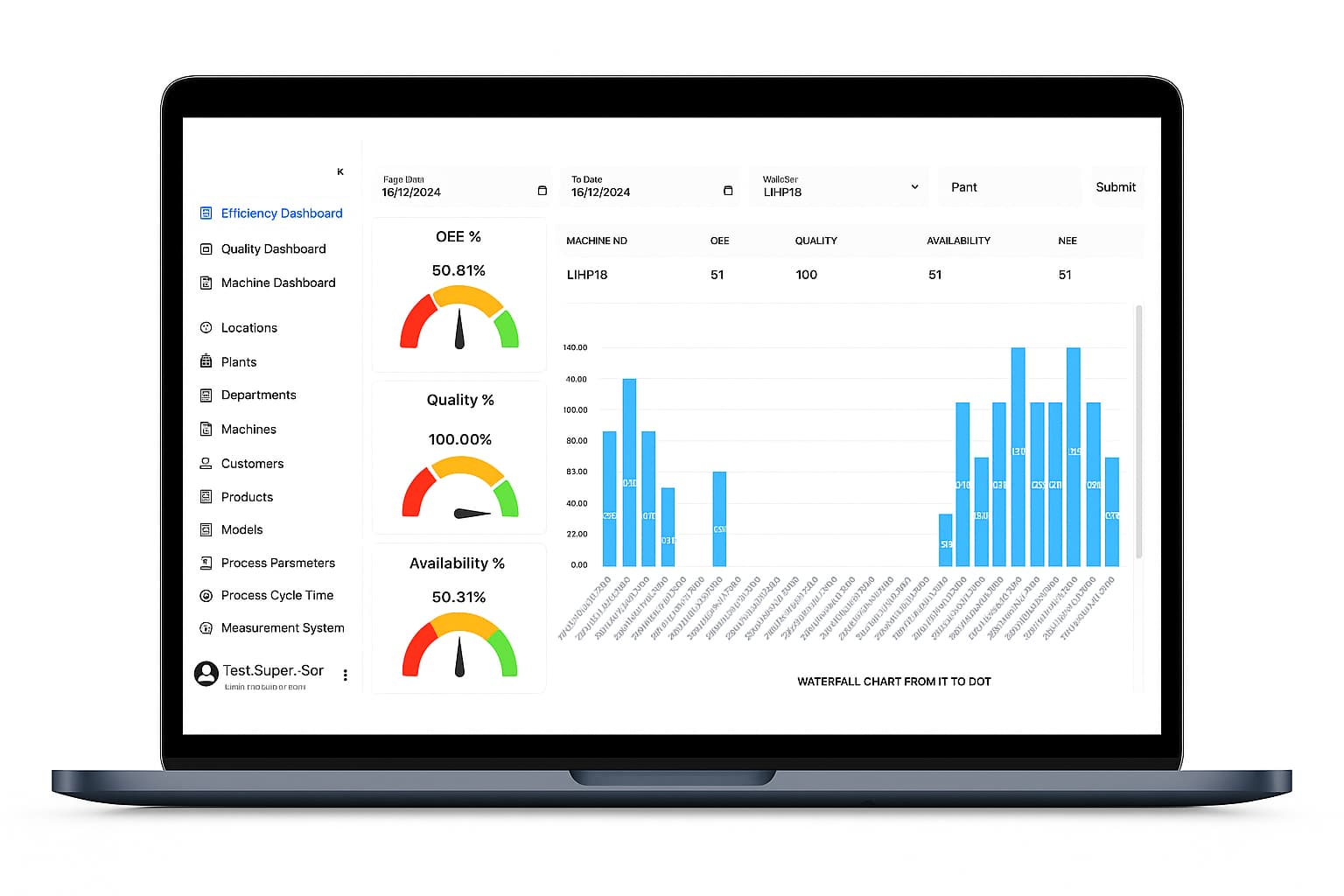
IIoT Technologies empowers manufacturers with smart connectivity and real-time data insights to transform their factories into intelligent, data-driven ecosystems. It brings together machines, sensors, and analytics onto a single platform, offering live production tracking, machine health monitoring, predictive maintenance, and energy efficiency analysis. With features like OEE dashboards, quality reports, workforce efficiency, trial mode simulations, and remote diagnostics — IIoT Technologies enables optimized operations, reduced downtime, and actionable decisions. From shop floor to top floor, it’s your complete solution for Industry 4.0 transformation — anytime, anywhere.
Quality dashboards provide a clear and organized view of product performance across different categories and customer segments. With detailed insights at your fingertips, you can quickly identify quality trends, frequent defect areas, and customer-specific quality issues. This enables teams to make informed decisions and take corrective actions faster. The data is visually structured for easy understanding and continuous monitoring.
This feature enables real-time tracking of machine availability, performance, and quality — the core components of Overall Equipment Effectiveness (OEE). It helps you identify bottlenecks, unplanned downtimes, and underperformance as they occur. With live visibility, plant managers can take immediate actions to keep operations efficient and productive. OEE data also supports long-term maintenance and efficiency planning.
The production counter tracks both approved and rejected units in real time, allowing you to monitor your output with precision. Every rejected unit is logged with an associated reason, giving clear insights into quality issues or machine-related problems. This helps improve production accuracy and reduces waste over time.
Traceability ensures full visibility of your production process from raw materials to final delivery. Every component, batch, and process step is tracked and recorded, enabling compliance with quality standards and regulations. This not only helps identify issues quickly but also improves accountability and product reliability.
Trial Mode allows you to simulate production conditions before full implementation. This feature is useful for testing new processes, product configurations, or machine setups without disrupting the actual workflow. It helps in identifying risks, validating assumptions, and optimizing production strategies beforehand. Trial Mode minimizes operational errors and improves deployment success.
This feature tracks all cost elements tied to a specific work order, including labor, materials, and machine usage. It helps manufacturers understand the real-time expenses involved in producing a specific item or batch. With this data, cost overruns can be identified early, and budgeting becomes more accurate. The result is improved profitability and operational transparency.
Track operator performance, task completion times, and idle periods to gain deep insights into workforce productivity. This feature helps identify skill gaps, high-performing operators, and inefficiencies in task assignments. By analyzing these metrics, supervisors can optimize workforce scheduling, training programs, and workload distribution for better output.
These reports provide detailed logs of every production run, organized by batch, job, and order. You can view summaries on an hourly, daily, or monthly basis to understand trends and spot issues. The data supports audits, quality reviews, and production planning. It offers a historical view that’s essential for strategic decisions and compliance documentation.
Integrate your IIoT platform with existing quality assurance and control systems to streamline testing and inspections. This ensures that every quality checkpoint is documented and meets defined standards. Whether it’s manual inspection or automated measurements, data flows seamlessly into the system for unified reporting and corrective action tracking.
This feature supports real-time monitoring through sensors that measure temperature, pressure, flow rate, weight, distance, and more. It enables proactive maintenance, real-time alerts, and automatic logging of process data. The integration helps you achieve greater accuracy, reduce human error, and respond to abnormalities before they impact operations.
Access Controls ensure secure, role-based access to the system, providing different levels of visibility and control to users such as Plant Heads, Admins, Operators, and Supervisors. This maintains data confidentiality and prevents unauthorized changes. Permissions can be customized to match organizational hierarchy, making the system both flexible and secure.

Join 10k+ people to get notified about new posts, news and updates.
Do not worry we don't spam!